
Fifty years after surfacing, “Jaws” is still leaving other movies dead in the water.
When it opened over Labor Day weekend, Steven Spielberg’s toothy monster flick grossed $8.2 million before dropping anchor as the second-biggest draw of the week. Not in 1975. In 2025.
Repertory programming is having a moment, with cinemas across the country reporting strong attendance for rereleased old favorites. In recent weeks, for example, I was able to take my son to see “The Revenant” (2015), “Fruitvale Station” (2013) and “Jerry Maguire” (1996) on the big screen, and theater managers say returning movies like these often out-earn new releases.
The Milwaukee Film Festival, which launches its 18th edition today, is catching that wave with perfect timing. While it has always saved room for archival screenings, this year’s slate features a treasure trove of classics, from “A Bay of Blood” (1971) and “Stop Making Sense” (1984) to “Labyrinth” (1986) and “School of Rock” (2003).
Nostalgia, of course, drives the growing demand for retro experiences. There are other factors—a dwindling of the current product pipeline, a desire to escape tiny screens, a pining for a vanished monoculture—but the urge to rekindle the feelings of youth primarily explains why there’s a built-in audience for movies that were once popular with boomers, Gen Xers or millennials. Think of “Easy Rider,” “The Breakfast Club” and the Twilight Saga. But what about movies made a century ago?
Silent classic celebrates its centennial
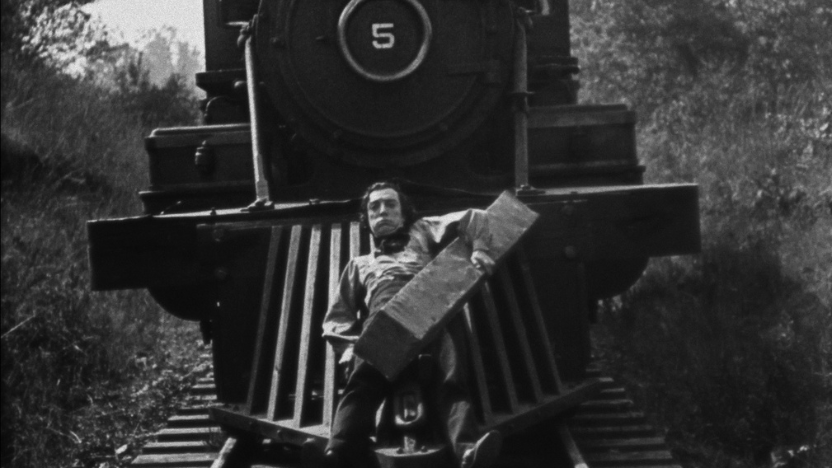
The festival can’t count on nostalgia to bring viewers to an anniversary screening of “The General,” Buster Keaton’s landmark 1926 chase comedy set during the Civil War, but it can offer a communal, throwback event reminiscent of a time, still true not so long ago, when the movie business was the center of popular culture. Keaton, like Chaplin, was one of the biggest, most innovative stars of the Roaring Twenties and “The General” was among the most expensive movies of the period, boasting perilous stunts and a jaw-dropping crash involving a real steam locomotive, a burning bridge and a river that proved to be the silent era’s costliest single shot.
When I show “The General” to high schoolers, that scene always elicits gasps—every penny is on the screen—and questions, too. How did they do that? Where did they do that? What was the insurance company thinking? How did they get the train out of the river?
Those questions are really just one: How has making movies changed between then and now? Watching silent pictures often requires climbing into the time machine inside your mind—the flux capacitor is over there, next to your prefrontal cortex—and trying to receive the movie the way contemporary audiences would have received it. This year MFF will nurture the time warp by inviting the world-famous Anvil Orchestra to perform their original score for “The General” as a live musical accompaniment.
“The General” isn’t Keaton’s funniest film, but it is his greatest artistic accomplishment. One reason the (still ingenious) gags are more intermittent is that Keaton was striving, against all conventional wisdom, to merge two dominant yet incongruous strands of popular cinema at the time. Broad comedies were short, fast and preposterous; historical epics were long, slow and earthbound. He also sought to balance an accurate Civil War backdrop with a grandly Romantic vision of love, war and heroism. Visually “The General” resembles Mathew Brady’s famous, unsparing war photographs but rhythmically it beats with a poet’s pulse.
Now considered one of the masterpieces of American cinema, “The General” initially failed at the box office. Imagine being a filmgoer in 1926 and not quite knowing what to do with this newfangled kind of movie and you begin to comprehend how Keaton, who always pushed the mechanical and creative possibilities of early motion pictures, was a man both of and ahead of his time.
That fact points toward an enduring conundrum that, to modern eyes, cannot be easily overlooked. By making the movie’s protagonist a Southern engineer whose train and girlfriend are stolen by Union troops, Keaton peppers his movie with realistic details of the Confederacy. These are limited, however, to flags, gray coats and vague battle references. The movie may aim for authenticity, but it finally tips toward abstraction, never grappling with the real reasons for the war. It’s a comedy about unquenchable love, after all, and it was a different time, we could say. But perhaps our time machine can only take us so far.
“The General” will screen at 6 p.m. Monday inside the Oriental Theatre, which will rightfully host all of the fest’s retro events, including those listed below. Entering this movie palace, originally built in 1927 and now housing a restored 1925 Wurlitzer pipe organ, always feels like stepping into the past.
Friday, April 16
Slasher movies are notorious for thin characters and helter-skelter plots, so it’s fitting that “A Bay of Blood” (11:59 p.m., Oriental Theatre), often cited as a genre forebear, has those traits in its genes. But it also has director Mario Bava’s signature flair, brutal kills and a love-it-or-hate-it ending. I’m in the second camp, but if you’re in the first, you’ll be happy to know that Severin Films will have a lobby booth with Blu-rays and free barf bags.
Saturday, April 25
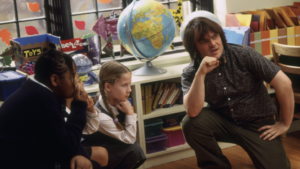
In “School of Rock” (3 p.m., Oriental Theatre), Dewey Finn has no job and never thinks about anything other than music. “I serve society by rocking,” he retorts, and what’s great about Richard Linklater’s comedy is that it shares Dewey’s exuberant conviction, even after he lies his way into a classroom and starts teaching his private-school charges how to be rock stars. In a perfect match between actor and character, Jack Black makes man-child enthusiasm Dewey’s tragic flaw but also his saving grace: He can’t help but show these kids how to love themselves.
There’s still something freshly peculiar about the moment when David Byrne’s liquid, paddling arms begin to harmonize with his weirdly swaying knees and hips while he sings “Life During Wartime” in the Talking Heads concert film “Stop Making Sense” (9:30 p.m., Oriental Theatre). It’s somehow ethereal and robotic and coordination-defying all at once. When you see it, you’ll want to try it. The good news is that viewers are always encouraged to put on their best moves during the festival’s traditional screening of Jonathan Demme’s 1984 classic, which returns after a one-year hiatus. Bring your dancing shoes—and, if you can pull it off, maybe wear a light-gray replica Big Suit, too. Hesitant? Remember Dewey Finn’s encouragement: “Go ahead, fancy pants!”
Sunday, April 26
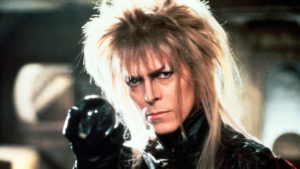
I haven’t seen Jim Henson’s musical fantasy “Labyrinth” (3:30 p.m., Oriental Theatre) since the ‘80s, but who could forget David Bowie’s sad hair as the Goblin King? That’s a practical effect as startling as any in the dangerous maze populated by gnomes, trolls and pixies. Come for the imaginative puppetry, stay for a post-film live podcast recording for Radio Milwaukee’s Cinebuds series.
The Milwaukee Film Festival starts today and runs through April 30. The full lineup plus ticket and venue information are online at mkefilm.org/mff.
Comments
Critic Speak uses Disqus for comments. Loading Disqus connects your browser to Disqus and may allow Disqus to collect device, activity, and cookie information under its own privacy policy.
Read the Privacy Policy